रसोई की सही दिशा से घर में आएगी खुशहाली | The Right Kitchen Direction Brings Happiness and Prosperity to Your Home
Hindi:
रसोई की सही दिशा से घर में आएगी खुशहाली! 🏡🔥
प्रस्तावना: घर की खुशहाली में रसोई का महत्त्व
भारतीय परंपरा में रसोई को घर का एक महत्वपूर्ण हिस्सा माना जाता है। यह केवल भोजन बनाने का स्थान नहीं, बल्कि परिवार के स्वास्थ्य, पोषण और दैनिक जीवन से जुड़ा केंद्र भी है। वास्तु शास्त्र के अनुसार, घर में रसोई की दिशा, गैस स्टोव की स्थिति, साफ-सफाई और वस्तुओं की व्यवस्था का विशेष महत्त्व बताया गया है।
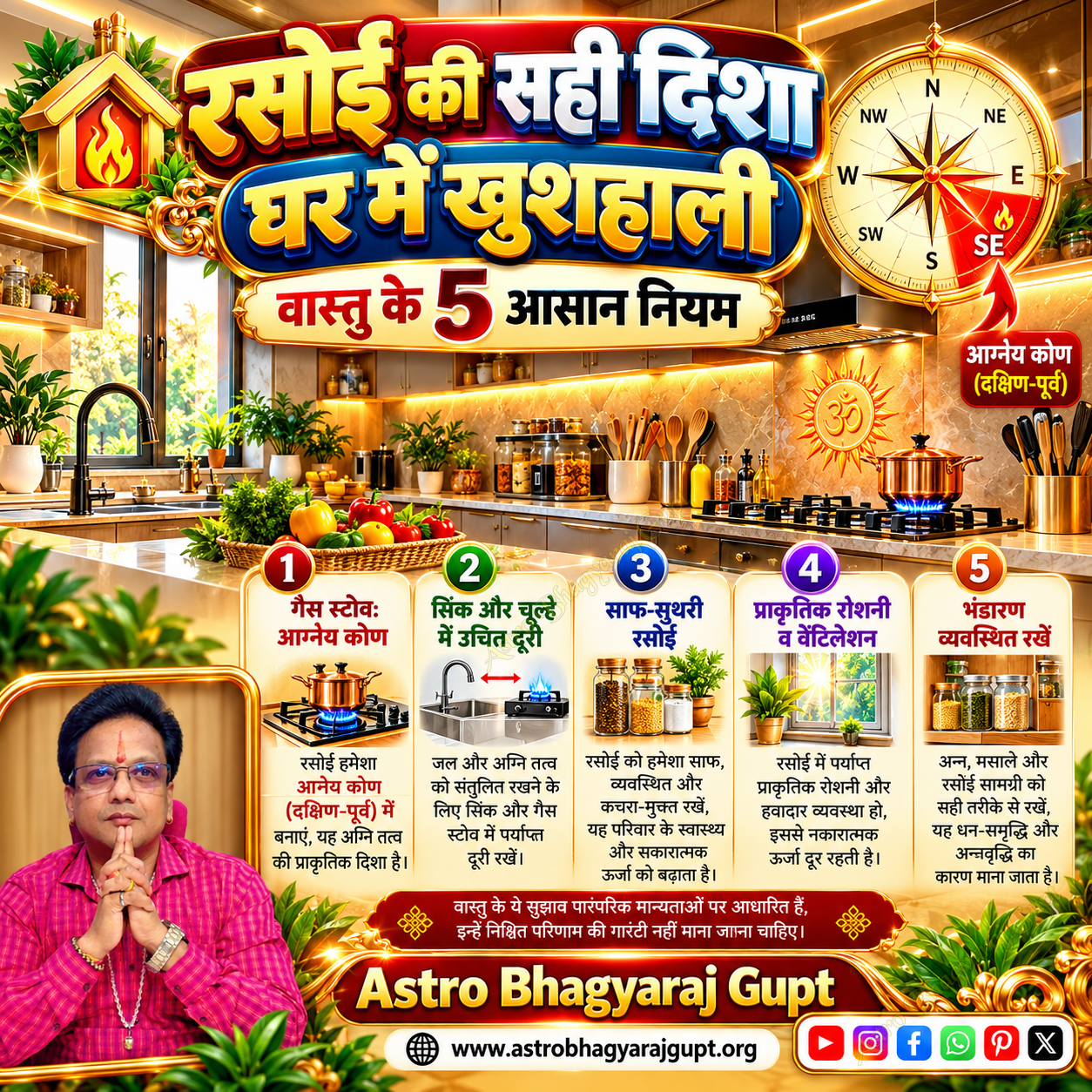
पारंपरिक वास्तु मान्यताओं में रसोई के लिए दक्षिण-पूर्व दिशा, जिसे आग्नेय कोण कहा जाता है, को उपयुक्त माना जाता है। इस दिशा का संबंध अग्नि तत्व से जोड़ा जाता है। मान्यता है कि रसोई का उचित नियोजन घर में संतुलित और सकारात्मक वातावरण बनाने में सहायक हो सकता है।
आइए जानते हैं रसोई से जुड़े कुछ महत्वपूर्ण वास्तु सिद्धांत, जिन्हें अपनाकर आप अपने घर को अधिक व्यवस्थित, स्वच्छ और सुविधाजनक बना सकते हैं।
1. रसोई के लिए कौन-सी दिशा मानी जाती है शुभ?
वास्तु शास्त्र की पारंपरिक मान्यताओं के अनुसार, दक्षिण-पूर्व दिशा रसोई के लिए प्राथमिक विकल्प मानी जाती है। इसे आग्नेय कोण कहा जाता है और इसका संबंध अग्नि तत्व से बताया जाता है।
यदि घर की बनावट के कारण दक्षिण-पूर्व दिशा में रसोई बनाना संभव न हो, तो कुछ वास्तु परंपराएँ उत्तर-पश्चिम दिशा को वैकल्पिक स्थान मानती हैं। हालांकि, रसोई की दिशा तय करते समय घर का वास्तविक नक्शा, उपलब्ध स्थान, वेंटिलेशन और सुरक्षा को प्राथमिकता देना आवश्यक है।
वास्तु सुझाव: केवल दिशा के आधार पर रसोई में बड़े बदलाव करने के बजाय, पहले यह देखें कि वहाँ पर्याप्त रोशनी, हवा और सुरक्षित रूप से खाना बनाने की सुविधा उपलब्ध है या नहीं।
2. गैस स्टोव की सही स्थिति
वास्तु की पारंपरिक मान्यताओं के अनुसार, गैस स्टोव को रसोई के आग्नेय कोण में रखना उपयुक्त माना जाता है। कुछ वास्तु पद्धतियों में खाना बनाते समय पूर्व दिशा की ओर मुख करके खाना बनाने को भी प्राथमिकता दी जाती है।
गैस स्टोव की स्थिति तय करते समय कुछ व्यावहारिक बातों का ध्यान रखें:
स्टोव को ऐसी जगह रखें जहाँ खाना बनाते समय पर्याप्त कार्यक्षेत्र उपलब्ध हो।
गैस सिलेंडर, पाइप और कनेक्शन को सुरक्षित रखें तथा रिसाव की नियमित जाँच करें।
स्टोव को पर्दों, ज्वलनशील वस्तुओं और ऐसी सामग्री से दूर रखें जो आग पकड़ सकती है।
खाना बनाते समय उचित वेंटिलेशन सुनिश्चित करें।
वास्तु संबंधी मान्यताएँ व्यक्तिगत आस्था का विषय हैं, लेकिन गैस और आग से जुड़ी सुरक्षा हमेशा आवश्यक है।
3. सिंक और गैस स्टोव के बीच रखें उचित दूरी
रसोई में सिंक और गैस स्टोव का उपयोग बार-बार होता है। वास्तु की कुछ परंपराओं में जल तत्व और अग्नि तत्व को अलग रखने पर जोर दिया जाता है। इसी कारण सिंक और स्टोव को एक-दूसरे से उचित दूरी पर रखने की सलाह दी जाती है।
व्यावहारिक रूप से भी दोनों के बीच पर्याप्त कार्यक्षेत्र होने से खाना बनाना आसान होता है। इससे पानी के छींटे सीधे गर्म बर्तनों या जलती हुई लौ तक पहुँचने की संभावना कम की जा सकती है।
ध्यान रखें: सिंक और स्टोव के बीच कोई एक निश्चित दूरी सभी रसोई के लिए अनिवार्य नहीं है। वास्तविक व्यवस्था रसोई के आकार, उपकरणों और सुरक्षा संबंधी आवश्यकताओं के अनुसार होनी चाहिए।
4. रसोई की साफ-सफाई पर दें विशेष ध्यान
स्वच्छ रसोई स्वस्थ जीवनशैली का एक महत्वपूर्ण हिस्सा है। वास्तु की पारंपरिक मान्यताओं में भी साफ-सुथरे और व्यवस्थित घर को सकारात्मक वातावरण से जोड़ा जाता है।
रसोई को स्वच्छ रखने के लिए:
खाना बनाने के बाद काउंटर और स्टोव साफ करें।
कूड़ेदान को नियमित रूप से खाली करें।
सिंक में गंदे बर्तन लंबे समय तक जमा न होने दें।
खाद्य सामग्री को नमी और कीड़ों से बचाकर रखें।
समय-समय पर फ्रिज, अलमारियों और स्टोरेज की सफाई करें।
साफ-सुथरी रसोई भोजन की स्वच्छता बनाए रखने और रोजमर्रा के काम को आसान बनाने में मदद करती है।
5. प्राकृतिक रोशनी और वेंटिलेशन का रखें ध्यान
रसोई में उचित रोशनी और हवा की व्यवस्था बहुत जरूरी है। खाना बनाते समय धुआँ, भाप और गर्मी उत्पन्न होती है। यदि रसोई में पर्याप्त वेंटिलेशन न हो, तो घर के अंदर हवा की गुणवत्ता प्रभावित हो सकती है।
इसलिए रसोई बनवाते या व्यवस्थित करते समय इन बातों का ध्यान रखें:
जहाँ संभव हो, खिड़की या अन्य उपयुक्त वेंटिलेशन की व्यवस्था रखें।
खाना बनाते समय चिमनी या उपयुक्त एग्जॉस्ट सिस्टम का उपयोग करें।
कार्यक्षेत्र में पर्याप्त रोशनी रखें, ताकि चाकू और गर्म बर्तनों का उपयोग सुरक्षित रूप से किया जा सके।
गैस की गंध महसूस होने पर आग न जलाएँ और बिजली के स्विच न चलाएँ। सुरक्षित स्थान पर जाकर गैस सप्लाई बंद करें, यदि ऐसा सुरक्षित रूप से संभव हो, और संबंधित गैस सेवा से सहायता लें।
अच्छा वेंटिलेशन रसोई को अधिक आरामदायक और सुरक्षित बनाने में मदद करता है।
6. अनाज, मसालों और खाद्य सामग्री का सही भंडारण
रसोई में अनाज, दालें, मसाले, तेल और अन्य खाद्य सामग्री को व्यवस्थित ढंग से रखना उपयोगी होता है। वास्तु की कुछ मान्यताओं में रसोई के भंडारण को भी महत्त्व दिया जाता है, जबकि व्यावहारिक दृष्टि से सही स्टोरेज भोजन को ताजा रखने और बर्बादी कम करने में मदद करता है।
इन सुझावों को अपनाएँ:
अनाज और दालों को साफ, सूखे और ढक्कन वाले डिब्बों में रखें।
मसालों को नमी और सीधी धूप से बचाएँ।
खाद्य सामग्री को इस्तेमाल की तारीख और ताजगी के अनुसार व्यवस्थित करें।
भारी बर्तनों को ऐसी जगह रखें जहाँ से उन्हें आसानी से और सुरक्षित रूप से निकाला जा सके।
सफाई के रसायनों को खाद्य सामग्री से अलग रखें।
सुव्यवस्थित स्टोरेज से रसोई में समय की बचत होती है और अनावश्यक अव्यवस्था कम होती है।
7. रसोई में पानी और अग्नि के संतुलन का वास्तु सिद्धांत
वास्तु शास्त्र में अग्नि और जल को अलग-अलग तत्वों के रूप में देखा जाता है। पारंपरिक वास्तु मान्यताओं के अनुसार, रसोई में गैस स्टोव और सिंक की स्थिति निर्धारित करते समय इन तत्वों के बीच संतुलन रखने पर जोर दिया जाता है।
हालाँकि, वास्तु संबंधी सुझावों को घर की वास्तविक जरूरतों के अनुरूप अपनाना चाहिए। रसोई का आकार, पाइपलाइन, विद्युत व्यवस्था, उपकरणों की सुरक्षा और आने-जाने के लिए पर्याप्त जगह जैसे व्यावहारिक पहलू भी उतने ही महत्त्वपूर्ण हैं।
यदि रसोई पहले से बनी हुई है, तो केवल वास्तु मान्यताओं के कारण महँगे बदलाव करना आवश्यक नहीं है। पहले छोटी और उपयोगी व्यवस्थाओं पर ध्यान दें।
8. क्या रसोई का वास्तु घर की खुशहाली से जुड़ा है?
पारंपरिक वास्तु शास्त्र में रसोई को घर के वातावरण और समृद्धि से प्रतीकात्मक रूप से जोड़ा जाता है। मान्यता है कि रसोई का उचित नियोजन, स्वच्छता और संतुलित व्यवस्था घर में सुखद वातावरण बनाने में सहायक हो सकती है।
व्यावहारिक रूप से भी एक साफ, सुरक्षित और सुव्यवस्थित रसोई परिवार के पोषण, समय प्रबंधन और दैनिक दिनचर्या को बेहतर बना सकती है।
यह ध्यान रखना चाहिए कि रसोई की दिशा से धन, सफलता या पारिवारिक सुख की निश्चित गारंटी मिलने का कोई स्थापित वैज्ञानिक प्रमाण नहीं है। घर की खुशहाली में आपसी सहयोग, स्वास्थ्य, आर्थिक नियोजन और जीवनशैली जैसे अनेक कारकों की भूमिका होती है।
निष्कर्ष: वास्तु के साथ सुरक्षा और सुविधा भी जरूरी
रसोई की दिशा और व्यवस्था के संबंध में वास्तु शास्त्र कई पारंपरिक सुझाव देता है। इनमें दक्षिण-पूर्व दिशा को प्राथमिकता देना, गैस स्टोव की उचित स्थिति, सिंक और स्टोव के बीच कार्यक्षेत्र बनाए रखना, साफ-सफाई करना तथा पर्याप्त रोशनी और वेंटिलेशन सुनिश्चित करना शामिल है।
इन सुझावों को अपनाते समय अपनी रसोई के आकार, जरूरतों और सुरक्षा को प्राथमिकता दें। एक स्वच्छ, व्यवस्थित और सुविधाजनक रसोई परिवार की दैनिक दिनचर्या को बेहतर बनाने में महत्वपूर्ण भूमिका निभा सकती है।
आपके घर की रसोई किस दिशा में है? हमें कमेंट में बताएँ और इस लेख को उन लोगों के साथ साझा करें जो अपने घर में वास्तु के पारंपरिक सिद्धांतों के अनुसार रसोई की व्यवस्था करना चाहते हैं।
Astro Bhagyaraj Gupt के साथ जुड़े रहें और वास्तु शास्त्र, वैदिक ज्योतिष तथा अंक ज्योतिष से संबंधित अधिक जानकारी प्राप्त करें।
🌐 वेबसाइट: https://www.astrobhagyarajgupt.org/
भारत के नंबर 1 अंक विशेषज्ञ एस्ट्रो भाग्यराज गुप्त द्वारा अपनी कुंडली का विश्लेषण करवाएं अपॉइंटमेंट के लिए इस लिंक पर क्लिक करें Appointment With Aacharya Ji by Call | आचार्य जी से फ़ोन पर बात करें पर या मोबाइल नंबर +91 91156 51234 पर संपर्क कर सकते हैं। ॐ नमो भगवते वासुदेवाय नमः
English:
The Right Kitchen Direction Brings Harmony and Prosperity to Your Home! 🏡🔥 | Vastu Shastra Kitchen Tips
Introduction: The Importance of the Kitchen in a Home
In Indian tradition, the kitchen is considered an important part of the home. It is not merely a place for preparing food but also a central space connected with family nutrition, health, and daily life. According to Vastu Shastra, the direction of the kitchen, the placement of the gas stove, cleanliness, and the arrangement of kitchen items are considered significant.
According to traditional Vastu beliefs, the southeast direction, known as the Agneya Kona, is considered a preferred location for the kitchen. This direction is associated with the Fire element. It is traditionally believed that proper kitchen planning can help create a balanced and positive atmosphere at home.
Let us explore some important Vastu principles for the kitchen that can help make your home more organized, clean, and convenient.
1. Which Direction Is Considered Auspicious for a Kitchen?
According to traditional Vastu Shastra beliefs, the southeast direction is considered the primary choice for locating a kitchen. It is known as the Agneya Kona and is associated with the Fire element.
If the layout of your home does not allow a kitchen in the southeast direction, some Vastu traditions consider the northwest direction as an alternative. However, when deciding on the kitchen's location, it is essential to prioritize the actual floor plan, available space, ventilation, and safety.
Vastu Tip: Instead of making major changes based only on direction, first ensure that the kitchen has adequate lighting, proper airflow, and a safe cooking arrangement.
2. The Right Placement of the Gas Stove
According to traditional Vastu beliefs, placing the gas stove in the southeast corner of the kitchen is considered appropriate. Some Vastu systems also recommend facing east while cooking.
Keep the following practical points in mind when positioning your gas stove:
Place the stove where there is enough workspace for comfortable cooking.
Keep the gas cylinder, pipes, and connections secure, and check them regularly for leaks.
Keep the stove away from curtains, flammable objects, and materials that can easily catch fire.
Ensure proper ventilation while cooking.
Vastu beliefs are a matter of personal tradition and faith, but safety precautions involving gas and fire are always essential.
3. Maintain Proper Space Between the Sink and Gas Stove
The sink and gas stove are among the most frequently used areas in a kitchen. Some traditional Vastu systems emphasize keeping the Water element and Fire element separate. For this reason, they recommend maintaining suitable space between the sink and the stove.
From a practical perspective, sufficient workspace between these areas also makes cooking easier. It can reduce the likelihood of water splashing directly onto hot cookware or an open flame.
Important: There is no single fixed distance between the sink and stove that is mandatory for every kitchen. The arrangement should depend on the kitchen's size, appliances, and safety requirements.
4. Pay Special Attention to Kitchen Cleanliness
A clean kitchen is an important part of a healthy lifestyle. Traditional Vastu beliefs also associate a clean and organized home with a positive environment.
Follow these tips to keep your kitchen clean:
Clean the countertop and stove after cooking.
Empty the dustbin regularly.
Avoid leaving dirty dishes in the sink for long periods.
Store food safely to protect it from moisture and pests.
Clean the refrigerator, cabinets, and storage areas periodically.
A clean kitchen helps maintain food hygiene and makes everyday cooking more convenient.
5. Ensure Adequate Natural Light and Ventilation
Proper lighting and ventilation are essential in the kitchen. Cooking produces smoke, steam, and heat. If a kitchen lacks adequate ventilation, indoor air quality may be affected.
Keep the following points in mind when designing or organizing your kitchen:
Install a window or another suitable ventilation system wherever possible.
Use a chimney or appropriate exhaust system while cooking.
Ensure sufficient lighting around work areas so that knives and hot utensils can be handled safely.
If you smell gas, do not light a flame or operate electrical switches. Move to a safe location, shut off the gas supply if it is safe to do so, and contact your gas service provider for assistance.
Good ventilation helps make the kitchen more comfortable and safer to use.
6. Store Grains, Spices, and Food Items Properly
Keeping grains, pulses, spices, cooking oil, and other food items organized is useful in every kitchen. Some Vastu traditions also emphasize food storage arrangements. From a practical perspective, proper storage helps preserve food freshness and reduce waste.
Follow these suggestions:
Store grains and pulses in clean, dry, airtight containers.
Protect spices from moisture and direct sunlight.
Organize food items according to their freshness and expiration dates.
Keep heavy utensils in places where they can be accessed safely and easily.
Store cleaning chemicals separately from food items.
Organized storage saves time and reduces unnecessary clutter in the kitchen.
7. The Vastu Principle of Balancing Water and Fire in the Kitchen
In Vastu Shastra, Water and Fire are viewed as separate elements. According to traditional Vastu beliefs, maintaining an appropriate arrangement between the gas stove and sink is important when planning a kitchen.
However, Vastu recommendations should be adapted to the actual needs of the home. The size of the kitchen, plumbing, electrical arrangements, appliance safety, and sufficient walking space are equally important practical considerations.
If your kitchen is already built, expensive renovations are not necessary solely because of Vastu beliefs. Start by making small, useful improvements.
8. Is Kitchen Vastu Connected with the Happiness of a Home?
Traditional Vastu Shastra symbolically connects the kitchen with the atmosphere and prosperity of a home. It is believed that proper planning, cleanliness, and an organized kitchen can contribute to a pleasant living environment.
From a practical perspective, a clean, safe, and well-organized kitchen can also support family nutrition, time management, and a smoother daily routine.
It is important to understand that there is no established scientific evidence that the direction of a kitchen guarantees wealth, success, or family happiness. A family's well-being depends on many factors, including mutual support, health, financial planning, and lifestyle.
Conclusion: Prioritize Safety and Convenience Along with Vastu
Vastu Shastra offers several traditional recommendations regarding kitchen direction and organization. These include preferring the southeast direction, positioning the gas stove appropriately, maintaining adequate workspace between the sink and stove, keeping the kitchen clean, and ensuring sufficient lighting and ventilation.
While applying these suggestions, prioritize the size of your kitchen, your household needs, and safety. A clean, organized, and convenient kitchen can play an important role in improving the family's daily routine.
Which direction is your kitchen facing? Tell us in the comments and share this article with people who want to organize their kitchens according to traditional Vastu principles.
Stay connected with Astro Bhagyaraj Gupt for more information about Vastu Shastra, Vedic Astrology, and Numerology.
🌐 Website: https://www.astrobhagyarajgupt.org/
Analyse your Horoscope by India no 1 Astrologer Astro Bhagyaraj Gupt take appointment click at this link Appointment With Aacharya Ji by Call | आचार्य जी से फ़ोन पर बात करें or You can whatsapp +91 91156 51234 . Om Namho Bhagwate Vasudevaya Namha.
100% SECURE PAYMENT
Your transactions are protected with industry-leading encryption and security protocols. We ensure complete safety of your personal and payment information. Trust us with your confidential data as we use certified payment gateways and SSL technology.


