एक स्त्री के आँसू ने खोल दिया कर्म और भाग्य का सबसे बड़ा रहस्य | A woman's tears revealed the greatest secret of karma and destiny!
Hindi:
जब नारी के आँसू ने बदल दिया भाग्य — एक ऋषि का सत्य और धर्म का फैसला
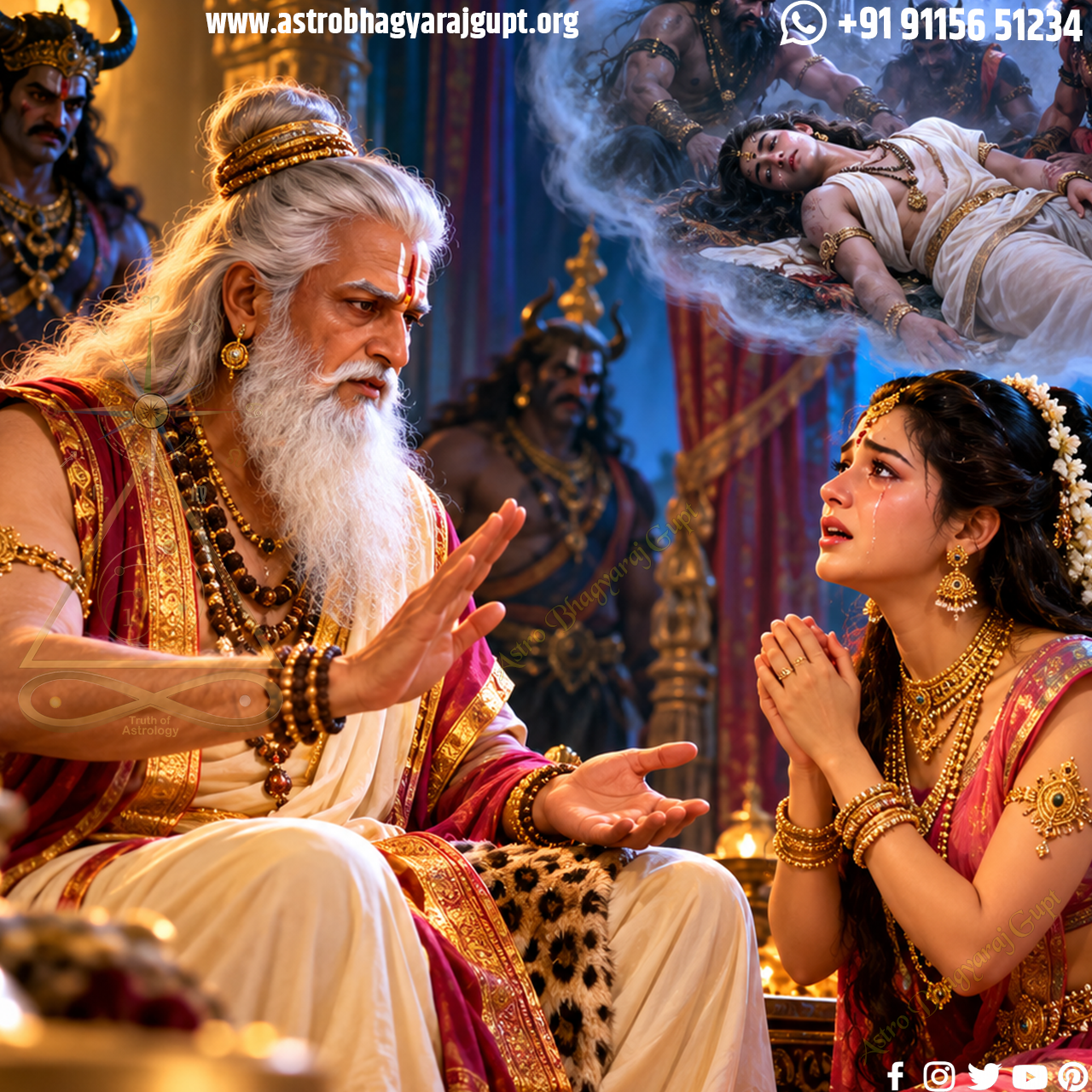
महाभारत काल की एक अत्यंत मार्मिक घटना है, जिसमें एक असहाय स्त्री अपने जीवन के सबसे कठिन समय में एक महान ऋषि के सामने अपनी पीड़ा लेकर पहुँचती है। उसके नेत्रों में आँसू थे, हृदय में भय था और मन में केवल एक प्रश्न था
—“आखिर मेरे साथ ही ऐसा क्यों हुआ?”
राजमहल में चारों ओर वैभव था, बड़े-बड़े योद्धा उपस्थित थे, विद्वान और राजपुरुष भी वहाँ मौजूद थे, लेकिन उस स्त्री के दुःख को समझने वाला कोई दिखाई नहीं दे रहा था। जिन लोगों के पास शक्ति थी, वे मौन थे और जिनके पास ज्ञान था, वे परिस्थितियों के आगे विवश दिखाई दे रहे थे।
वह स्त्री एक महान ऋषि के चरणों में जाकर बैठ गई। उसने हाथ जोड़कर कहा—
“गुरुदेव! मैंने जीवन में किसी का बुरा नहीं चाहा। मैंने सदैव धर्म का पालन किया, अपने परिवार का सम्मान किया और अपने कर्तव्यों को पूरी निष्ठा से निभाया। फिर मेरे जीवन में इतना दुःख क्यों आया? क्या मेरे पिछले कर्म इतने भारी थे कि आज मुझे यह सब सहना पड़ रहा है?”
ऋषि ने उसकी ओर शांत दृष्टि से देखा। उनके चेहरे पर क्रोध नहीं था, बल्कि गहरी करुणा थी।
उन्होंने कहा—
“पुत्री, जीवन में आने वाला प्रत्येक दुःख केवल दंड नहीं होता। कई बार दुःख मनुष्य को उसके भीतर छिपी शक्ति से परिचित कराने के लिए भी आता है।”
स्त्री ने आश्चर्य से ऋषि की ओर देखा।
ऋषि बोले—
“मनुष्य जब सुख में होता है, तब वह अपने वास्तविक सामर्थ्य को भूल जाता है। उसे लगता है कि संसार सदैव उसके साथ रहेगा। लेकिन जब विपत्ति आती है, तब उसे पता चलता है कि उसका वास्तविक सहारा कौन है—धन, पद, संबंधी, मित्र या स्वयं परमात्मा।”
स्त्री की आँखों से आँसू बहने लगे।
उसने पूछा—
“लेकिन गुरुदेव, यदि भगवान हमारे साथ हैं तो निर्दोष मनुष्य को कष्ट क्यों मिलता है?”
ऋषि कुछ क्षण मौन रहे और फिर बोले—
“क्योंकि संसार केवल परिणाम से नहीं, कर्म से चलता है। हर कर्म का एक प्रभाव होता है। कुछ कर्मों का फल तुरंत मिलता है, कुछ का समय आने पर और कुछ का प्रभाव आने वाली परिस्थितियों के रूप में सामने आता है। लेकिन इसका अर्थ यह नहीं कि मनुष्य अपने वर्तमान कर्मों से अपना भविष्य नहीं बदल सकता।”
उन्होंने आगे कहा—
“याद रखो, कर्म का सिद्धांत मनुष्य को डराने के लिए नहीं, उसे जागृत करने के लिए है।”
धर्म की सबसे बड़ी परीक्षा विपत्ति में होती है
ऋषि ने कहा—
“जब परिस्थितियाँ तुम्हारे अनुकूल हों, तब धर्म का पालन करना आसान है। लेकिन जब तुम्हारे सामने अन्याय हो, अपमान हो, भय हो और कोई तुम्हारा साथ न दे—तब भी सत्य और धर्म का मार्ग चुनना ही वास्तविक परीक्षा है।”
उन्होंने उसे समझाया कि मनुष्य को अपने जीवन में तीन बातों को कभी नहीं छोड़ना चाहिए—
सत्य, धैर्य और ईश्वर पर विश्वास।
क्योंकि धन चला जाए तो वापस कमाया जा सकता है।
पद चला जाए तो पुनः प्राप्त किया जा सकता है।
संबंध टूट जाएँ तो नए संबंध बन सकते हैं।
लेकिन यदि मनुष्य अपने भीतर से सत्य और धर्म खो देता है, तो उसके पास सब कुछ होते हुए भी जीवन खाली हो जाता है।
ऋषि ने कहा—
“तुम्हारे आँसू तुम्हारी कमजोरी नहीं हैं। आँसू उस हृदय की पहचान हैं जिसमें संवेदना अभी जीवित है। लेकिन आँसू बहाने के बाद उठ खड़ा होना ही मनुष्य की वास्तविक शक्ति है।”
जिसे संसार कमजोर समझता है, वही इतिहास बदल सकता है
उन्होंने उस स्त्री से कहा—
“कभी भी अपने आपको परिस्थितियों से छोटा मत समझना। इतिहास में बड़े परिवर्तन हमेशा शक्तिशाली लोगों ने ही नहीं किए। कई बार एक पीड़ित व्यक्ति की पुकार ने राजाओं के निर्णय बदल दिए, एक स्त्री के संकल्प ने युद्ध का कारण बना दिया और एक साधारण मनुष्य की सत्यनिष्ठा ने पूरे समाज को नई दिशा दी।”
स्त्री ने पूछा—
“तो क्या मुझे अपने भाग्य से लड़ना चाहिए?”
ऋषि मुस्कुराए और बोले—
“भाग्य से लड़ना नहीं, अपने कर्मों को इतना श्रेष्ठ बनाना चाहिए कि भाग्य को भी अपना मार्ग बदलना पड़े।”
यह बात उसके हृदय में उतर गई।
उसने अपने आँसू पोंछे और कहा—
“गुरुदेव, अब मैं अपने दुःख को अपनी कमजोरी नहीं बनने दूँगी। मैं इसे अपनी शक्ति बनाऊँगी।”
ऋषि ने आशीर्वाद देते हुए कहा—
“यही धर्म है। विपत्ति में टूट जाना सरल है, लेकिन विपत्ति के बीच भी सत्य पर टिके रहना ही महानता है।”
कर्म का रहस्य
हमारे जीवन में भी कई बार ऐसी परिस्थितियाँ आती हैं जब हमें लगता है कि हमारे साथ ही अन्याय क्यों हो रहा है।
हम दूसरों को सुखी देखते हैं और अपने जीवन की कठिनाइयों को देखकर सोचते हैं—
“मैंने ऐसा क्या गलत किया?”
लेकिन हमें यह समझना चाहिए कि हर व्यक्ति का जीवन एक अलग कर्मयात्रा है।
किसी के पास धन है लेकिन मानसिक शांति नहीं।
किसी के पास परिवार है लेकिन प्रेम नहीं।
किसी के पास प्रसिद्धि है लेकिन संतोष नहीं।
और किसी के पास बहुत कम साधन होते हुए भी वह भीतर से अत्यंत प्रसन्न रहता है।
इसलिए केवल बाहरी परिस्थितियों को देखकर किसी के जीवन का मूल्यांकन नहीं किया जा सकता।
ईश्वर के न्याय में देर हो सकती है, लेकिन अन्याय नहीं।
जो व्यक्ति दूसरों को कष्ट देता है, वह यह भूल सकता है कि उसका कर्म समाप्त हो गया, लेकिन कर्म का लेखा समाप्त नहीं होता।
इसी प्रकार जो व्यक्ति चुपचाप धर्म के मार्ग पर चलता है, उसकी मेहनत और उसके त्याग भी कभी व्यर्थ नहीं जाते।
नारी का सम्मान ही समाज का सम्मान है
इस कथा का सबसे बड़ा संदेश नारी सम्मान से जुड़ा है।
किसी भी समाज की वास्तविक सभ्यता इस बात से पता चलती है कि वहाँ स्त्रियों के साथ कैसा व्यवहार किया जाता है।
जिस घर में नारी का सम्मान होता है, वहाँ सुख और समृद्धि का वातावरण बनता है।
और जहाँ नारी का अपमान होता है, वहाँ धीरे-धीरे शांति समाप्त होने लगती है।
भारतीय परंपरा में इसलिए कहा गया है—
“यत्र नार्यस्तु पूज्यन्ते रमन्ते तत्र देवताः।”
अर्थात जहाँ नारी का सम्मान होता है, वहाँ देवताओं का वास माना गया है।
नारी केवल परिवार की जिम्मेदारी उठाने वाली नहीं है। वह परिवार की संस्कारदाता, शक्ति और भावनात्मक आधार होती है।
इसलिए किसी स्त्री के आँसू को कभी छोटा मत समझिए।
कभी-कभी एक स्त्री की मौन पीड़ा आने वाले समय में बहुत बड़ा परिवर्तन लेकर आती है।
इस कथा की सबसे बड़ी सीख
जीवन में चाहे कितनी भी कठिन परिस्थिति क्यों न आए—
धर्म मत छोड़िए।
लोग आपका साथ छोड़ दें—
ईश्वर पर विश्वास मत छोड़िए।
परिस्थितियाँ आपके विरुद्ध हो जाएँ—
अपने कर्मों को मत छोड़िए।
आँखों में आँसू आ जाएँ—
लेकिन उम्मीद मत छोड़िए।
और यदि कभी आपको लगे कि आपके साथ अन्याय हुआ है, तो बदले की भावना में स्वयं को मत जलाइए।
क्योंकि—
समय बदलता है।
परिस्थितियाँ बदलती हैं।
लोग बदलते हैं।
लेकिन अच्छे कर्मों का प्रभाव कभी व्यर्थ नहीं जाता।
इसलिए आज यदि जीवन में कठिन समय चल रहा है, तो स्वयं से केवल इतना कहिए—
“यह मेरा अंत नहीं है। यह मेरे धैर्य की परीक्षा है। मैं टूटूँगा नहीं, मैं सीखूँगा। मैं रुकूँगा नहीं, मैं आगे बढ़ूँगा। और मैं अधर्म का मार्ग नहीं चुनूँगा।”
क्योंकि जिस मनुष्य के साथ सत्य और धर्म खड़े हों, उसे संसार की कोई शक्ति लंबे समय तक पराजित नहीं कर सकती।
🙏 संदेश
English
When a Woman’s Tears Changed Destiny — A Sage’s Truth and the Verdict of Dharma
In the age of the Mahabharata, there is a deeply moving incident in which a helpless woman approaches a great sage during the most difficult phase of her life. Her eyes were filled with tears, her heart was filled with fear, and there was only one question in her mind—
“Why did this happen to me?”
The royal palace was filled with wealth and grandeur. Great warriors were present, along with learned scholars and powerful officials. Yet, no one seemed willing to understand the pain of that woman. Those who possessed power remained silent, while those who possessed knowledge appeared helpless before the circumstances.
The woman went to a great sage and sat at his feet. With folded hands, she said—
“Gurudev! I have never wished harm upon anyone. I have always followed the path of Dharma, respected my family, and fulfilled my responsibilities with complete devotion. Then why has so much suffering entered my life? Were my past actions so heavy that I am being forced to endure all this today?”
The sage looked at her calmly. There was no anger in his eyes, only deep compassion.
He said—
“Daughter, not every suffering that comes into life is a punishment. Sometimes suffering comes to introduce a person to the strength hidden within them.”
The woman looked at the sage with wonder.
The sage continued—
“When a person is surrounded by happiness, they often forget their true strength. They begin to believe that the world will always remain by their side. But when adversity arrives, they discover who their true support really is—wealth, position, relatives, friends, or the Supreme Lord Himself.”
Tears began to flow from the woman’s eyes.
She asked—
“But Gurudev, if God is always with us, why does an innocent person have to suffer?”
The sage remained silent for a few moments and then said—
“The world does not operate only through results; it operates through karma. Every action creates an effect. Some actions bear fruit immediately, some after time, and some appear later through circumstances. But this does not mean that a person cannot change their future through their present actions.”
He further said—
“Remember, the principle of karma is not meant to frighten a person; it is meant to awaken them.”
The Greatest Test of Dharma Comes During Adversity
The sage said—
“When circumstances are favorable, following Dharma is easy. But when injustice, humiliation, fear, and loneliness stand before you, and no one supports you—choosing truth and Dharma even then is the real test.”
He explained that a person should never abandon three things in life—
Truth, patience, and faith in God.
Because if wealth is lost, it can be earned again.
If position is lost, it can be regained.
If relationships are broken, new relationships can be formed.
But if a person loses truth and Dharma from within, then even possessing everything in the world, their life becomes empty.
The sage said—
“Your tears are not your weakness. Tears are the sign of a heart in which compassion is still alive. But after shedding those tears, rising again is the true strength of a human being.”
The One Whom the World Considers Weak Can Change History
The sage said to the woman—
“Never consider yourself smaller than your circumstances. Great changes in history have not always been created by powerful people. Many times, the cry of a suffering person has changed the decisions of kings, the determination of a woman has changed the course of war, and the truthfulness of an ordinary person has given a new direction to an entire society.”
The woman asked—
“Then should I fight against my destiny?”
The sage smiled and replied—
“Do not fight with destiny. Instead, make your actions so noble that even destiny is forced to change its course.”
These words touched her heart.
She wiped her tears and said—
“Gurudev, from today onward, I will not allow my suffering to become my weakness. I will transform it into my strength.”
The sage blessed her and said—
“This is Dharma. Breaking down in adversity is easy, but remaining firmly rooted in truth even during adversity is true greatness.”
The Mystery of Karma
Many times in our own lives, we face circumstances that make us wonder—
“Why is this happening only to me?”
We see others living happily and look at our own difficulties, asking ourselves—
“What wrong have I done?”
But we must understand that every person has a different journey of karma.
Someone may possess wealth but have no peace of mind.
Someone may have a family but lack love.
Someone may have fame but no contentment.
And someone may have very few material possessions yet remain deeply happy within.
Therefore, we should never judge the quality of someone's life merely by looking at their external circumstances.
There may be a delay in divine justice, but there is never injustice in divine justice.
A person who causes pain to others may believe that their action has ended, but the account of karma does not end.
Likewise, the efforts and sacrifices of someone who quietly follows the path of Dharma never go to waste.
Respect for Women Is the Respect of Society
One of the greatest messages of this story is connected with respect for women.
The true civilization of any society can be understood by observing how women are treated within it.
Where a woman is respected, an atmosphere of happiness, dignity, and prosperity develops.
And where women are insulted and humiliated, peace gradually begins to disappear.
In Indian tradition, it is therefore said—
“Yatra Naryastu Pujyante Ramante Tatra Devataah.”
It means—
“Where women are honored, there the divine forces are believed to dwell.”
A woman is not merely someone who carries the responsibilities of a family. She is the source of values, strength, संस्कार, and emotional foundation of the family.
Therefore, never underestimate a woman's tears.
Sometimes, the silent pain of a woman can bring about a tremendous transformation in the future.
The Greatest Lesson of This Story
No matter how difficult the circumstances of life become—
Never abandon Dharma.
Even if people leave your side—
Never abandon your faith in God.
Even if circumstances turn against you—
Never abandon your good actions.
Even if tears fill your eyes—
Never abandon hope.
And if you ever feel that you have been treated unjustly, do not burn yourself in the fire of revenge.
Because—
Injustice does not always have to be answered with injustice.
Sometimes the greatest answer is simply to stand firmly with the truth.
Time changes.
Circumstances change.
People change.
But the impact of good actions never goes to waste.
So, if you are going through a difficult period in your life today, tell yourself—
“This is not my end. This is a test of my patience. I will not break; I will learn. I will not stop; I will move forward. And I will never choose the path of Adharma.”
Because when truth and Dharma stand beside a person, no power in the world can defeat them for long.
🙏 Message
Keep performing your duties, keep walking on the path of Dharma, and keep your faith in God.
Sometimes, at the very moment when all hope seems to be disappearing, a new door of divine grace begins to open.
100% SECURE PAYMENT
Your transactions are protected with industry-leading encryption and security protocols. We ensure complete safety of your personal and payment information. Trust us with your confidential data as we use certified payment gateways and SSL technology.


