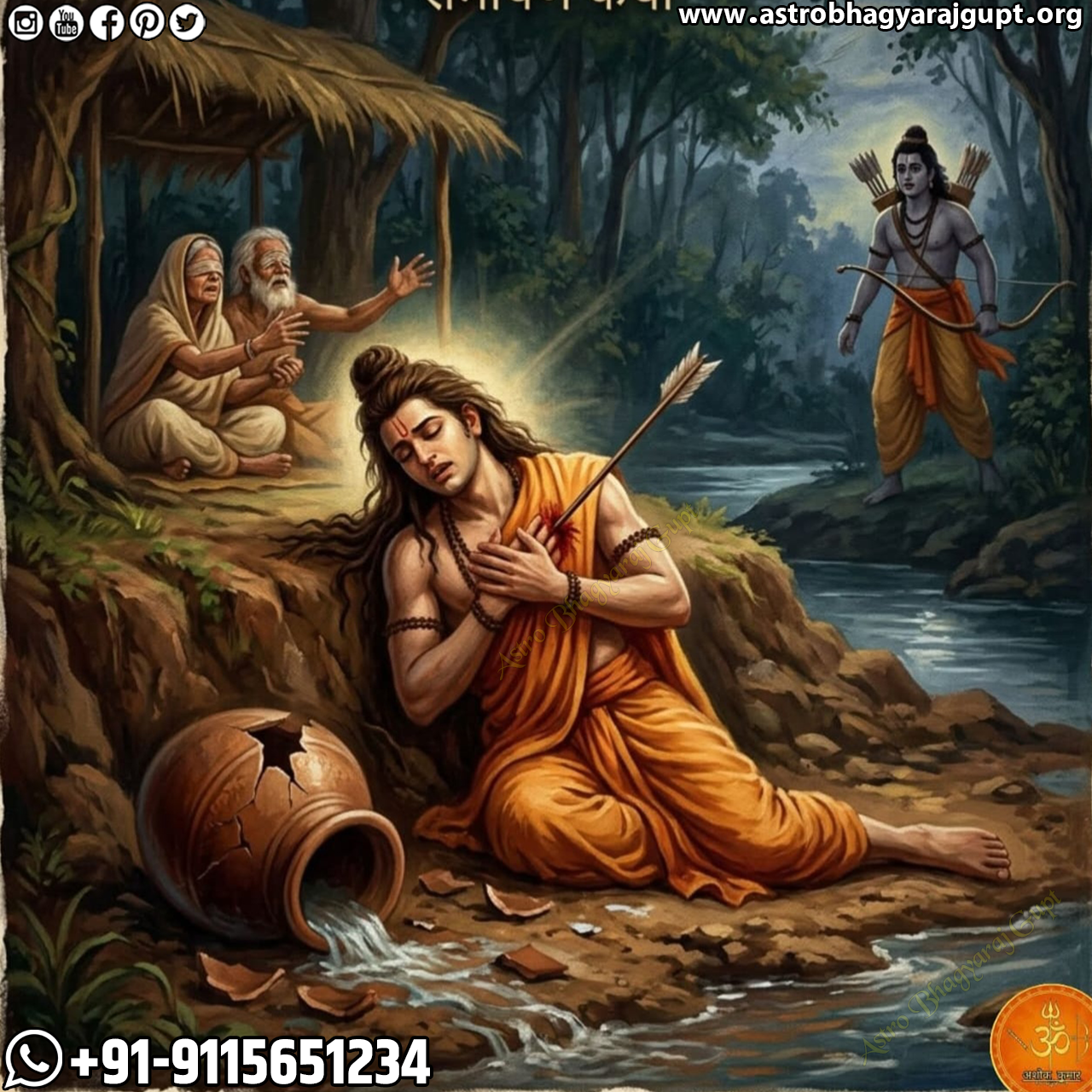
दशरथ की एक भूल और मिला पुत्र-वियोग का श्राप | A Single Mistake by Dasharatha and the Curse of Losing His Son.
Hindi:
श्रवण कुमार की कथा से भला कौन परिचित नहीं है। आधुनिक काल में वो एक कर्तव्यनिष्ठ पुत्र के एक ऐसे उदाहरण हैं जिनके जैसा बनना हर संतान का एक स्वप्न होता है। हम ये भी जानते हैं कि श्रवण कुमार की कथा श्रीराम के पिता महाराज दशरथ से जुडी हुई है। किन्तु क्या वाल्मीकि रामायण में श्रवण कुमार नाम के किसी चरित्र का वर्णन दिया गया है? तो इसका उत्तर है नहीं। रामायण में किसी श्रवण कुमार का वर्णन हमें नहीं मिलता।
तो अब प्रश्न ये आता है कि यदि रामायण में श्रवण कुमार नाम का कोई चरित्र ही नहीं है तो फिर ये कथाएं कहाँ से प्रचलित हुई हैं? तो इसका उत्तर ये है कि इस घटना का पूरा वर्णन वाल्मीकि रामायण में दिया गया है किन्तु वो बालक, जिसे हम आज श्रवण कुमार के नाम से जानते हैं, उस नाम का कोई उल्लेख नहीं है। बांकी जो भी कथा प्रचलित है वो रामायण में ही दी गयी है।
वाल्मीकि रामायण के अयोध्या कांड के सर्ग ६३ और ६४ में हमें इस कथा का वर्णन मिलता है। जब श्रीराम को वन गए हुए ६ दिन का समय बीत गया तब महाराज दशरथ ने माता कौशल्या को इस कथा के बारे में बताया था। वे उन्हें बताते हैं कि जब वे केवल एक राजकुमार थे और एक अच्छे धनुर्धर के रूप में उनकी ख्याति सब ओर फ़ैल गयी थी उस समय सभी लोग ये कहते थे कि राजकुमार दशरथ शब्द वेधी बाण चलाना जानते हैं।
उस समय माता कौशल्या का विवाह नहीं हुआ था और दशरथ भी केवल युवराज थे। वर्षा ऋतु के काल में एक बार दशरथ आखेट के लिए सरयू के तट पर चले गए। उन्होने सोचा कि जब रात में कोई भैंसा, हाथी या सिंह नदी तट पर जल पीने आएगा तो वो उसका आखेट करेंगे। उस समय वहां गहन अंधकार था और कुछ भी देखना असंभव था। किन्तु अपनी शब्द वेधी बाण कला के मद में दशरथ को इस बात की कोई चिंता नहीं थी।
उसी समय उन्हें नदी तट से हाथी के पानी पीने की ध्वनि सुनाई दी। उन्होंने सोचा कि हाथी ही अपनी सूंड में जल को खींच रहा होगा। यही सोच कर उन्होंने अपने तरकस से एक बाण निकाला और विषधर के समान दीप्तिमान उस बाण को उस शब्द की ओर लक्ष्य करके चला दिया। तभी उन्हें जल में गिरते हुए किसी वनवासी का हाहाकार सुनाई दिया।
उन्हें एक मानव की वाणी सुनाई देने लगी जो कह रहा था कि "आह! मेरे जैसे तपस्वी पर शस्त्र का प्रहार कैसे संभव हुआ? मैं तो इस नदी के तट पर जल लेने के लिए आया था। किसने मुझे बाण मारा है? मैंने किसका क्या बिगाड़ा था? मैं तो हिंसा का त्याग कर तपस्वी के रूप में जीवन बिताता हूँ और कंद मूलों से ही जीविका चलाता हूँ, फिर मुझे जैसे निरपराध का वध क्यों किया जा रहा है? जिसने भी ये किया है उसका प्रयत्न व्यर्थ ही गया क्यूंकि उससे उसे कोई लाभ नहीं होगा, केवल अनर्थ ही हाथ लगेगा।"
उसने आगे कहा - "इस हत्यारे को संसार में कोई उसी तरह अच्छा नहीं समझेगा जैसे किसी गुरुपत्नीगामी को अच्छा नहीं समझा जाता। मुझे मृत्यु का भय नहीं है किन्तु मेरे मारे जाने से मेरे माता पिता को जो कष्ट होगा, उसके लिए मुझे अधिक शोक है। मैंने इन दोनों वृद्धों का बहुत समय से पालन पोषण किया है किन्तु अब मेरे ना रहने पर वे किस प्रकार जीवन निर्वाह करेंगे? इस घाती ने एक ही बाण से मुझे और मेरे वृद्ध माता पिता को एक साथ मृत्यु के मुख में भेज दिया है। किस विवेकहीन व्यक्ति ने हम सभी लोगों का एक साथ ही वध कर डाला?"
उनकी ऐसी करुणा भरी पुकार सुनकर दशरथ बड़े घबराये। उनसे रहा नहीं गया और वे उस कुमार के निकट गए। उन्होंने देखा कि वो बाण से बिंधे पड़े थे। उनकी जटाएं बिखर गयी थी, घड़े का जल गिर गया था और वे रक्त और धूल में सन गए थे। उनकी ऐसी दशा देख कर दशरथ भयभीत हो गए। तब उस युवक ने दशरथ को इस प्रकार देखा जैसे अपने नेत्रों की अग्नि से उन्हें भस्म कर देंगे।
उन्होंने कहा - "राजन! वन में रहते हुए मैंने तुम्हारा कौन सा अपराध किया था जिस कारण तुमने मुझे बाण मारा? मैं तो अपने माता पिता के लिए पानी लेने इस नदी तट पर आया था। तुमने एक ही बाण से मुझे और मेरे अंधे और बूढ़े माता पिता को मार डाला। वे दोनों बड़े दुबले और अंधे हैं। निश्चय ही व्यास से पीड़ित होकर वे मेरी प्रतीक्षा में बैठे होंगे। लगता है उन्हें ये नहीं पता कि मेरी क्या दशा है और यदि वे जान भी लें तो क्या? वे असमर्थ हैं और चल फिर नहीं सकते। अतः तुम ही जाकर मेरे पिता को यह समाचार सुना दो। यदि तुम स्वयं कह दोगे तो वे क्रोध में भर कर तुम्हे भस्म नहीं करेंगे। राजन! ये पगडंडी उधर ही गयी है जहाँ मेरे पिता का आश्रम है। तुम जाकर उन्हें प्रसन्न करो जिससे कुपित होकर वे तुम्हे श्राप ना दें। मेरे शरीर से इस बाण को निकाल दो क्यूंकि ये मेरे मर्मस्थान को बहुत पीड़ा दे रहा है।"
ये देख कर दशरथ सोच में पड़ गए। यदि बाण नहीं निकालते हैं तो ये उन्हें पीड़ा देता रहेगा। और यदि निकालते हैं तो ये अभी अपने प्राणों से हाथ धो बैठेंगे। दशरथ को अत्यंत दुखी और व्यथित देख कर उस कुमार ने कहा - "हे राजन! मेरी बात सुनो। मुझसे ब्रह्महत्या हो गयी है, इस चिंता को अपने ह्रदय से निकाल दो। मैं ब्राह्मण नहीं हूँ इसीलिए तुम्हारे में में ब्राह्मणवध को लेकर कोई व्यथा नहीं होनी चाहिए। मैं वैश्य पिता और शूद्र माता के गर्भ से उत्पन्न हुआ हूँ। अतः तुम्हे ब्रह्महत्या का पाप नहीं लगेगा।"
ये सुनकर दशरथ ने उस बाण को उनके ह्रदय से निकाल दिया जिससे उन्होंने तत्काल अपने प्राण त्याग दिए। इसके बाद उन्होंने उस घड़े को जल से भरा और मुनिकुमार के बताये मार्ग से चल कर उसके पिता के आश्रम पहुंचे। वहां उन्होंने उनके दुबले, अंधे और बूढ़े माँ बाप को देखा। दशरथ घबराते हुए आगे बढे।
उनके पैरों की आहट पाकर उसके पिता बोले - "बेटा! देर क्यों लगा रहे हो? शीघ्र जल ले आओ। तुमने बड़ी देर की। तुम्हारी माता तुम्हारे लिए उत्कंठित हो गयी है इसीलिए शीघ्र आश्रम के भीतर प्रवेश करो। बेटा! यदि तुम्हारी माता या मैंने तुम्हारा कोई अप्रिय किया हो तो उसे तुम्हे अपने मन में नहीं लाना चाहिए। हम असहाय हैं, तुम्ही हमारे सहायक हो। हम अंधे हैं, तुम्ही हमारे नेत्र हो। हम लोगों के प्राण तुम्ही में अटके हुए हैं इसीलिए बताओ, तुम बोलते क्यों नहीं हो?"
तब दशरथ ने लड़खड़ाती हुए स्वर में कहा - "महात्मन! मैं आपका पुत्र नहीं, दशरथ नाम का एक क्षत्रिय हूँ। मैं नदी तट पर आखेट हेतु गया था। थोड़ी देर में नदी से हाथी के जल पीने का स्वर सुन कर मैंने बाण चला दिया जो एक तपस्वी को लगा। उनके आदेश पर मैंने उनका बाण निकाल दिया जिससे वे तत्काल स्वर्ग सिधार गए। इस प्रकार अनजाने में मेरे हाथ से आपके पुत्र का वध हो गया है। अतः आप जो भी शाप मुझे देना चाहें, दीजिये।"
अपने पुत्र की मृत्यु का समाचार सुनकर उसके पिता ने रोते हुए कहा - "राजन! यदि तुम अपना ये पापकर्म स्वयं आकर ना बताते तो तुम्हारे मस्तक के सैंकड़ों टुकड़े हो जाते। यदि कोई व्यक्ति किसी वानप्रस्थी का वध कर डाले, तो वो चाहे वज्रधारी इंद्र ही क्यों ना हो, अपने स्थान से भ्रष्ट हो जाता है। मुझ जैसे ब्रह्मवादी मुनि पर प्रहार करने वाले के मस्तक के सात टुकड़े हो जाते हैं। तुमने ये कर्म अनजाने में किया है इसीलिए अभी तक जीवित हो। यदि जान बूझ कर किया होता तो समस्त रघुकुल नष्ट हो जाता।"
उसके पिता ने आगे कहा - "राजन! तुम हम दोनों को उस स्थान पर ले चलो जहाँ हमारा पुत्र मरा पड़ा है। यही हमारे लिए उसका अंतिम दर्शन होगा।" तब दशरथ उन दोनों को उस स्थान पर ले आये और उन्हें उनके पुत्र के मृत शरीर का स्पर्श करवाया। फिर वे दोनों अपने पुत्र के शरीर से लिपट कर अनाथों की भांति विलाप करने लगे। अंत में उन्होंने अपने पुत्र को जलांजलि दी।
तब वो मुनिकुमार अपने पुण्य कर्मों के प्रभाव से दिव्य रूप धारण कर स्वर्ग की और जाने लगे। जाने से पहले उन्होंने एक मुहूर्त तक अपने माता पिता को आश्वासन दिया और फिर एक दिव्य विमान से स्वर्ग की ओर चले गए। तब उनके पिता ने दशरथ से कहा - "राजन! तुम आज ही मुझे भी मार डालो। मेरा एक ही पुत्र था जिसे बाण मार कर तुमने मुझे पुत्रहीन कर दिया। तुमने अज्ञानतावश जो मेरे बालक की हत्या की है उसके कारण मैं तुम्हे भयंकर श्राप दूंगा। इस समय पुत्र के वियोग से मुझे जैसा कष्ट हो रहा है, वैसा तुम्हे भी होगा। तुम भी पुत्र शोक में ही काल के गाल में जाओगे। तुमने वैश्यजातीय मुनि का वध किया है इसीलिए तुम्हे ब्रह्महत्या का पाप तो नहीं लगेगा किन्तु तुम्हारी भी यही दशा होगी।"
इस प्रकार उन्हें श्राप देकर वे दोनों बहुत देर तक विलाप करते रहे और फिर वे दोनों पति पत्नी अपने शरीर को जलती हुई चिता में डाल कर स्वर्ग की ओर चले गए। इस कथा को सुनाने के बाद ही महाराज दशरथ भी उस श्राप के प्रभाव से श्रीराम के विरह में मृत्यु को प्राप्त हुए।
तो यहाँ हम देख सकते हैं कि श्रवण कुमार की जो कथा हमें ज्ञात है उसका वर्णन रामायण में तो है किन्तु उस कथा में कहीं भी उनका नाम नहीं बताया गया है। उन्हें मुनिकुमार या युवक ही कहा गया है। अब आगे चल कर "श्रवण कुमार" ये नाम कैसे प्रसिद्ध हुआ इसके बारे में बहुत स्पष्ट वर्णन नहीं मिलता है। फिर भी श्रवण कुमार हमारी संस्कृति अभिन्न अंग हैं और सदा रहेंगे।
क़तर के नंबर 1 ज्योतिषी (मुनज्जिम (مُنَجِّم)) एस्ट्रो भाग्यराज गुप्त द्वारा अपनी कुंडली का विश्लेषण करवाएं अपॉइंटमेंट के लिए इस लिंक पर क्लिक करें Appointment With Aacharya Ji by Call | आचार्य जी से फ़ोन पर बात करें पर या मोबाइल नंबर +91 91156 51234 पर संपर्क कर सकते हैं। ॐ नमो भगवते वासुदेवाय नमः
English:
Who is not familiar with the story of Shravan Kumar? In modern times, he is considered the ideal example of a devoted and dutiful son, and every child dreams of being like him. We also know that the story of Shravan Kumar is connected with King Dasharatha, the father of Lord Rama. But does the Valmiki Ramayana actually mention a character named Shravan Kumar? The answer is no. The Ramayana does not contain any character by the name of Shravan Kumar.
This raises an important question: if there is no character named Shravan Kumar in the Ramayana, then where did these stories originate? The answer is that the entire incident is indeed described in the Valmiki Ramayana, but the young man whom we know today as Shravan Kumar is never referred to by that name. The rest of the story, however, is present in the Ramayana itself.
The story appears in Sargas 63 and 64 of the Ayodhya Kanda of the Valmiki Ramayana. Six days after Lord Rama had departed for the forest, King Dasharatha narrated this incident to Queen Kausalya. He told her that when he was still a prince and had become famous as a skilled archer, people praised him for his ability to shoot arrows guided solely by sound.
At that time, Dasharatha was not yet married to Kausalya and was only the crown prince. During the rainy season, he once went hunting on the banks of the Sarayu River. He planned to wait for a buffalo, elephant, or lion to come for water during the night and then hunt it. It was extremely dark, and visibility was almost impossible. However, Dasharatha was so confident in his skill of sound-guided archery that he paid no attention to the darkness.
Suddenly, he heard a sound from the riverbank that resembled an elephant drawing water into its trunk. Assuming it was indeed an elephant, he took a shining arrow from his quiver and shot it toward the source of the sound.
Immediately afterward, he heard a terrible cry of pain from a human being falling into the water.
A voice cried out:
“Alas! How could a weapon strike a hermit like me? I came only to fetch water from this river. Who has shot me? What harm had I done to anyone? I live peacefully, sustaining myself on roots and fruits, harming no one. Why then has an innocent person like me been killed? Whoever has done this will gain nothing but sorrow and misfortune.”
The young ascetic continued:
“The world will never regard such a killer as honorable. I do not fear death, but I grieve for my aged parents. I have cared for them for many years. How will they survive after I am gone? With a single arrow, this person has condemned not only me but also my blind and elderly parents to death. Which thoughtless man has destroyed all of us at once?”
Hearing these heartbreaking words, Dasharatha became deeply disturbed. He rushed to the young man and found him lying on the ground, pierced by the arrow. His matted locks were scattered, his water pot had fallen, and his body was covered with blood and dust.
The youth looked at Dasharatha with burning eyes and said:
“O King! What offense had I committed that you shot me? I came here only to fetch water for my parents. With a single arrow, you have killed me and my blind, aged parents as well. They are weak and helpless and must be waiting anxiously for me. Please go to them and tell them what has happened. If they hear it from you, they may not curse you in anger. Remove this arrow from my body, for it causes unbearable pain.”
Dasharatha hesitated. If he left the arrow in place, the youth would continue to suffer; if he removed it, death would come immediately.
Seeing Dasharatha's distress, the young ascetic said:
“Do not worry that you have committed Brahminicide. I am not a Brahmin. My father is a Vaishya and my mother a Shudra. Therefore, you will not incur the sin of killing a Brahmin.”
Upon hearing this, Dasharatha removed the arrow, and the young ascetic immediately passed away.
Following his final request, Dasharatha filled the water pot and walked to the hermitage where the youth’s blind and elderly parents lived.
Hearing his footsteps, the father assumed it was his son returning and said:
“My son, why have you taken so long? Bring the water quickly. Your mother is worried about you. If your mother or I have ever offended you, do not take it to heart. We are helpless without you. We are blind, and you are our eyes. Our lives depend on you. Why are you silent?”
With a trembling voice, Dasharatha replied:
“Revered sir, I am not your son. I am Dasharatha, a Kshatriya. While hunting near the river, I heard a sound and mistook it for an elephant drinking water. I shot an arrow, but it struck your son. At his request, I removed the arrow, and he passed away. Unknowingly, I have caused the death of your son. Whatever punishment or curse you deem fit, I am prepared to accept.”
Upon hearing this devastating news, the old father wept and said:
“King, had you not come and confessed your deed, your head would have shattered into hundreds of pieces. One who kills a forest-dwelling ascetic falls from his position, even if he were Indra himself. You acted unknowingly, which is why you still live. Had you done this intentionally, the entire Raghu dynasty would have been destroyed.”
The old sage then requested Dasharatha to take him and his wife to the place where their son lay.
Dasharatha led them there, and they touched the lifeless body of their son. Clinging to him, they cried in unbearable grief. After performing the final rites, they offered water in his memory.
By the power of his righteous deeds, the young ascetic then assumed a divine form and ascended toward heaven. Before leaving, he comforted his parents for a brief moment and departed in a celestial chariot.
Thereafter, his father cursed Dasharatha:
“Just as I am suffering today due to separation from my son, so shall you suffer. You too shall die consumed by the grief of separation from your son.”
After uttering this curse, the old couple mourned for a long time. Eventually, they entered their son's funeral pyre and departed for heaven.
Later, as foretold by the curse, King Dasharatha died in agony from separation from Lord Rama.
Conclusion
Thus, the story commonly associated with Shravan Kumar is indeed found in the Valmiki Ramayana, but nowhere in the text is the young ascetic identified by that name. He is referred to only as a young hermit (Muni Kumar) or youth. How the name “Shravan Kumar” later became associated with this character is not clearly documented. Nevertheless, Shravan Kumar remains an enduring symbol of filial devotion and an inseparable part of Indian cultural tradition.
analyse your horoscope by Qatar Best Astrologer (Munajjim (مُنَجِّم)) Astro Bhagyaraj Gupt take appointment click at this link Appointment With Aacharya Ji by Call | आचार्य जी से फ़ोन पर बात करें or You can whatsapp +91 91156 51234 .


