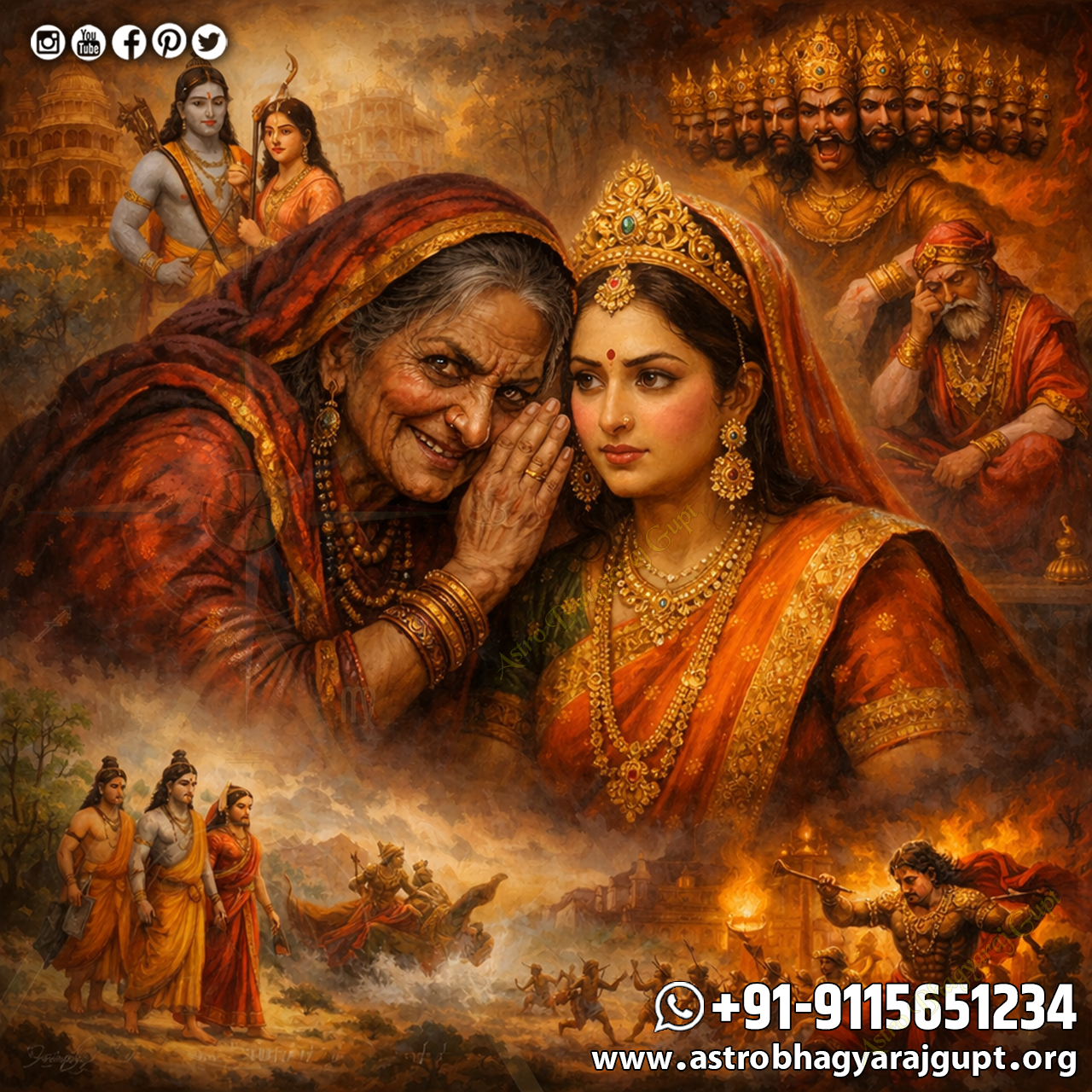
श्रीराम के 14 वर्ष के वनवास के पीछे का चौंकाने वाला रहस्य | The Shocking Secret Behind Rama’s 14-Year Exile.
Hindi:
मंथरा: वह स्त्री जिसने रामायण की दिशा बदल दी
महान महाकाव्य रामायण में हम प्रायः भगवान राम, सीता, लक्ष्मण, हनुमान और रावण जैसे तेजस्वी पात्रों को स्मरण करते हैं।
परंतु एक ऐसा पात्र भी है, जो स्वयं युद्धभूमि में नहीं उतरा, फिर भी पूरे इतिहास की धारा मोड़ दी।
उस स्त्री का नाम था — मंथरा।
मंथरा को सामान्यतः केवल “राम के वनवास की कारण” के रूप में देखा जाता है, किंतु वास्तव में वही रामायण की घटनाओं की प्रथम चिंगारी थी।
मंथरा कौन थी?
मंथरा अयोध्या की महारानी कैकेयी की धाय (पालन-कर्त्री) थी।
उसने कैकेयी को बचपन से पाला था, इसलिए उस पर उसका अत्यंत गहरा भावनात्मक प्रभाव था।
शारीरिक रूप से वह कुब्जा (कूबड़ वाली) थी, परंतु बुद्धि से तीक्ष्ण, राजमहल की राजनीति को भली-भाँति समझने वाली स्त्री थी।
एक संवाद जिसने इतिहास बदल दिया
जब राजा दशरथ ने राम के राज्याभिषेक की घोषणा की, तब संपूर्ण अयोध्या आनंद में डूब गई।
कैकेयी स्वयं भी प्रसन्न थी।
परंतु मंथरा नहीं।
मंथरा ने कैकेयी को समझाया—
• राम के राजा बनने से कौशल्या सर्वोपरि हो जाएँगी
• कैकेयी का प्रभाव समाप्त हो जाएगा
• भरत केवल नाम के राजकुमार रह जाएंगे
उसने कैकेयी को दशरथ द्वारा दिए गए दो वरदानों की याद दिलाई।
बस यहीं से भाग्य ने करवट ली।
चौदह वर्ष का वनवास
मंथरा की बातों से प्रभावित होकर कैकेयी ने वरदान माँगे—
1. भरत का राज्याभिषेक
2. राम का 14 वर्षों का वनवास
राजा दशरथ धर्म और वचन के बंधन में बँध गए।राम ने बिना विरोध स्वीकार किया
सीता और लक्ष्मण स्वेच्छा से उनके साथ वन चले गए।
यहीं से आरंभ हुई वह चौदह वर्ष की यात्रा, जो केवल वनवास नहीं, बल्कि धर्म की परीक्षा थी।
मंथरा और रावण का वध: अदृश्य संबंध
प्रश्न उठता है—
मंथरा का रावण से क्या संबंध?
यदि राम राजा बन जाते—
• वे वन में नहीं जाते
• ऋषियों की रक्षा का प्रसंग न होता
• शूर्पणखा, खर-दूषण, स्वर्ण मृग—कुछ भी न घटता
• सीता हरण न होता
• और लंका युद्ध भी नहीं होता
मंथरा के कारण राम वन गए,वन में गए तो राक्षसों से संघर्ष हुआ,
संघर्ष से सीता हरण हुआ,
और उसी से रावण का अंत हुआ।
इस प्रकार, मंथरा अप्रत्यक्ष रूप से रावण के वध की कारण बनी।
क्या मंथरा वास्तव में खलनायिका थी?
सामान्य दृष्टि से
• ईर्ष्यालु
• षड्यंत्रकारी
• दुखों की जननी
गूढ़ आध्यात्मिक दृष्टि से
• वह भाग्य का उपकरण थी
• ईश्वरीय योजना का एक आवश्यक पात्र
• जिसने अधर्म के विनाश का मार्ग खोला
हिंदू दर्शन कहता है—
कभी-कभी अधर्म भी धर्म की स्थापना का साधन बनता है।
मंथरा के बारे में कम जानी गई बातें
• कुछ लोककथाओं में कहा गया है कि मंथरा को बाद में अपने कर्मों पर पश्चाताप हुआ
• वह निजी स्वार्थ से नहीं, कैकेयी की रक्षा की भावना से प्रेरित थी
• उसके बिना राम का विष्णु-अवतार रूप पूर्ण नहीं होता
• वह दर्शाती है कि हर खलनायक स्वयं को खलनायक नहीं समझता
निष्कर्ष
मंथरा ने न शस्त्र उठाया,
न युद्ध लड़ा,
फिर भी उसने देवताओं और राजाओं के भाग्य को बदल दिया।
उसने एक ऐसी यात्रा आरंभ की—
जिससे धर्म की परीक्षा हुई,
मर्यादा स्थापित हुई,
और अंततः अधर्म का विनाश हुआ।
रामायण हमें सिखाती है कि इतिहास केवल नायकों से नहीं,
बल्कि उन लोगों से भी बनता है जो उन्हें उनके भाग्य की ओर धकेलते हैं।
हिमाचल प्रदेश के नंबर 1 ज्योतिषी एस्ट्रो भाग्यराज गुप्त द्वारा अपनी कुंडली का विश्लेषण करवाएं अपॉइंटमेंट के लिए इस लिंक पर क्लिक करें Appointment With Aacharya Ji by Call | आचार्य जी से फ़ोन पर बात करें पर या मोबाइल नंबर +91 91156 51234 पर संपर्क कर सकते हैं। ॐ नमो भगवते वासुदेवाय नमः
English:
Manthara: The Woman Who Changed the Course of the Ramayana
In the great epic Ramayana, we often remember illustrious figures such as Lord Rama, Sita, Lakshmana, Hanuman, and Ravana.
Yet there was one character who never stepped onto the battlefield, and still altered the course of history forever.
That woman was Manthara.
Manthara is commonly remembered as the one responsible for Rama’s exile. However, in reality, she was the first spark that set the entire chain of Ramayana’s events into motion.
Who Was Manthara?
Manthara was the nursemaid and caretaker of Queen Kaikeyi of Ayodhya.
Having raised Kaikeyi since childhood, she held a deep emotional influence over the queen.
Physically, she was described as hunchbacked, but she was highly intelligent and well-versed in the politics of the royal palace.
A Conversation That Changed History
When King Dasharatha announced Rama’s coronation, the entire city of Ayodhya rejoiced.
Kaikeyi herself was delighted.
But Manthara was not.
She warned Kaikeyi:
If Rama became king, Queen Kausalya would gain supreme influence.
Kaikeyi’s importance in the palace would diminish.
Bharata would remain a prince in name only.
She then reminded Kaikeyi of the two boons King Dasharatha had once promised her.
At that moment, destiny took a dramatic turn.
The Fourteen-Year Exile
Influenced by Manthara’s words, Kaikeyi demanded her two boons:
Bharata should be crowned king.
Rama should be exiled to the forest for fourteen years.
Bound by his promise and his commitment to dharma, King Dasharatha had no choice but to comply.
Rama accepted the decision without protest.
Sita and Lakshmana voluntarily accompanied him into exile.
Thus began a fourteen-year journey that was far more than a period of banishment—it became the ultimate test of righteousness, duty, and devotion.
Manthara and the Fall of Ravana: An Invisible Connection
A question naturally arises:
What connection did Manthara have with Ravana’s destruction?
Had Rama been crowned king immediately:
He would not have gone to the forest.
The protection of sages from demons would not have occurred.
The encounters with Shurpanakha, Khara, Dushana, and the golden deer would never have happened.
Sita would not have been abducted.
The war in Lanka would not have taken place.
Those events led to Sita’s abduction.
And ultimately, they resulted in Ravana’s downfall.
In this sense, Manthara became an indirect catalyst for the destruction of Ravana.
Was Manthara Truly a Villain?
From a conventional perspective, she appears to be:
Jealous
Manipulative
The source of great sorrow
From a deeper spiritual perspective, however, she can be seen as:
An instrument of destiny
A necessary participant in the divine plan
A catalyst who opened the path for the defeat of evil
Hindu philosophy often teaches that, at times, even seemingly negative actions become tools through which dharma is ultimately established.
Lesser-Known Facts About Manthara
Some traditional stories suggest that Manthara later regretted her actions.
She may have acted not out of personal ambition but from a desire to protect Kaikeyi’s interests.
Without her intervention, the divine purpose of Rama’s incarnation might not have unfolded in the same way.
Her character illustrates that many antagonists do not perceive themselves as villains.
Conclusion
Manthara never wielded a weapon.
She never fought a war.
Yet she changed the destinies of kings, kingdoms, and even gods.
She initiated a journey through which:
Dharma was tested,
Righteous conduct was established,
And ultimately, evil was destroyed.- The Ramayana teaches us that history is shaped not only by heroes, but also by those who unknowingly push heroes toward their destiny.
analyse your horoscope by Himachal Pradesh best Astrologer Astro Bhagyaraj Gupt take appointment click at this link Appointment With Aacharya Ji by Call | आचार्य जी से फ़ोन पर बात करें or You can whatsapp +91 91156 51234 .


